 RAYFUEL
 Diesel Injector Return Flow Test: Results, Causes and Next Steps
A diesel injector return flow test compares the amount of fuel returning from each
injector during the same operating period. A large difference between cylinders can help
a technician identify an injector with excessive internal leakage, but the result must be checked
against the correct workshop procedure and the engine manufacturer’s limits. The test is a
diagnostic comparison—not automatic proof that every injector with a different reading must be
replaced.
Quick answer: what does a return flow test show?
Common rail injectors use a controlled amount of fuel for internal lubrication and control.
That fuel returns through the leak-off circuit. If one injector returns substantially more fuel
than the others under the same conditions, rail pressure may become difficult to build. If one
returns unusually little, the cause may involve a restricted return path, test connection or an
internal injector problem. Always compare the result with application-specific service data.
When is a diesel injector return flow test useful?
A workshop may consider this test when a diesel engine shows hard starting, extended cranking,
unstable idle, low rail pressure, reduced power or a rail-pressure fault. Similar symptoms can also
come from the supply pump, pressure-control valve, fuel filter, air entering the low-pressure
circuit, wiring, sensors, compression or contaminated fuel. For that reason, return flow should be
one part of a structured diagnosis.
The test is especially useful when scan data shows that commanded and actual rail pressure do
not agree during cranking or idle. It gives the technician a way to compare cylinders without
removing every injector immediately. Browse Rayfuel’s
common rail injector
category when a verified replacement is required.
Tools and information needed before testing
- A return-flow or leak-off test kit suitable for the injector connection type.
- Equal-length hoses and clean, clearly marked measuring containers.
- Correct adapters that seal without damaging the injector return fittings.
- Diagnostic equipment when the workshop procedure requires rail-pressure or speed data.
- The engine code, injector system and application-specific service procedure.
- Eye protection, gloves and clean materials for controlling spilled diesel fuel.
Common rail systems operate at dangerous pressure. Never loosen a high-pressure pipe on a
running engine as a diagnostic shortcut. Follow the vehicle or engine manufacturer’s depressurizing
and safety procedure. The return side is lower pressure, but cleanliness remains essential because
small particles can damage precision fuel-system components.
Diesel injector return flow test procedure
- Confirm the test conditions. Check whether the specified procedure is carried
out during cranking, at idle, at a controlled engine speed or in more than one stage. Engine
temperature and test duration can affect the result. - Inspect the supply side first. Check the filter, visible fuel lines and
connections for restriction, leakage or air entry. Record relevant fault codes and rail-pressure
data before disturbing the system. - Clean the work area. Remove loose dirt around the injector return connections
so contamination cannot enter an open fitting. - Connect identical test lines. Fit the correct adapters and route each injector
to a separate graduated container. Keep the hose arrangement as equal as practical. - Run the specified test. Crank or operate the engine for the stated period.
Do not extend the time simply to obtain a larger volume, because the comparison must use consistent
conditions. - Stop and compare. Place the containers on a level surface and compare the
return quantity from every cylinder. Photograph or record the readings for the repair file. - Repeat when needed. An unclear result should be repeated after checking
adapters, hose routing and container position. Consistent repeat results are more useful than one
isolated measurement.
How to interpret return-flow results
| Observed pattern | Possible meaning | Next check |
|---|---|---|
| One injector returns much more than the others | Possible excessive internal leakage or control-valve wear | Repeat the comparison and check application limits, rail pressure and injector identification |
| All injectors show high return | Test conditions, temperature, system wear or an incorrect procedure may be involved | Verify the kit, duration and manufacturer data; inspect the wider fuel system |
| One injector shows very low or no return | Restricted return connection, incorrect adapter or an internal fault | Inspect the hose and fitting before condemning the injector |
| Volumes are similar but pressure remains low | The cause may be outside the injectors | Check fuel supply, pressure control, pump output, sensors and commanded pressure |
There is no universal milliliter limit that is correct for every diesel engine. Acceptable
quantity and cylinder-to-cylinder difference depend on injector design, test duration, engine
temperature, cranking speed and operating condition. Use the specification for the exact engine
and fuel system rather than a number taken from an unrelated online example.
Why a high return reading can cause hard starting
During cranking, the high-pressure pump must raise rail pressure quickly enough for the engine
control system to permit injection. Excessive internal leakage through one or more injectors can
send too much fuel back through the return circuit, preventing the rail from reaching the required
pressure. This is why a vehicle may crank for a long time or start more easily when warm or cold,
depending on the type of wear and operating conditions.
However, low cranking pressure is not exclusively an injector problem. Battery condition,
starter speed, low-pressure supply, a pressure regulator, rail-pressure sensor, pump wear or
electrical control can produce a similar symptom. Compare return-flow findings with live data and
the complete diagnostic picture.
Checks to complete before replacing an injector
A diesel injector return flow test should be repeated when a reading is unclear, so the workshop can confirm that the same cylinder remains different under controlled conditions.
- Repeat the test and confirm that the same cylinder remains different.
- Compare the results with the correct application-specific limit.
- Check the fuel filter and supply circuit for restriction or air entry.
- Inspect the return hoses and adapters for kinks, leaks or poor seating.
- Review rail-pressure commands, actual pressure and relevant fault codes.
- Confirm the injector part number, engine code and connector configuration.
- Consider contamination and the condition of the remaining fuel-system components.
When replacement is supported by the diagnosis, do not order by vehicle name alone. Different
fuel-system versions can be fitted to the same model and engine family. Please confirm OE number,
engine model or old part photos before ordering. Rayfuel’s
OE number matching form allows repair
shops and distributors to send the identification details needed for a fitment check.
After injector replacement
When a diesel injector return flow test and the wider diagnosis support replacement, record the original readings so they can be compared with rail-pressure behavior after the repair.
Use clean installation practices, replace required seals and follow the correct tightening
procedure. Some applications require injector calibration data, coding, adaptation or relearn;
others do not. Follow the service information for the exact engine rather than assuming one
procedure applies to every common rail system. After installation, clear relevant faults, check
for leaks, verify rail-pressure behavior and confirm that the original symptom has been resolved.
Diesel injector return flow test FAQ
Is a return flow test the same as a spray-pattern test?
No. A return flow test compares fuel leaving the injector through its return circuit while the
injectors are installed. Spray pattern, delivery quantity and response testing normally require
specialist bench equipment and appropriate safety controls.
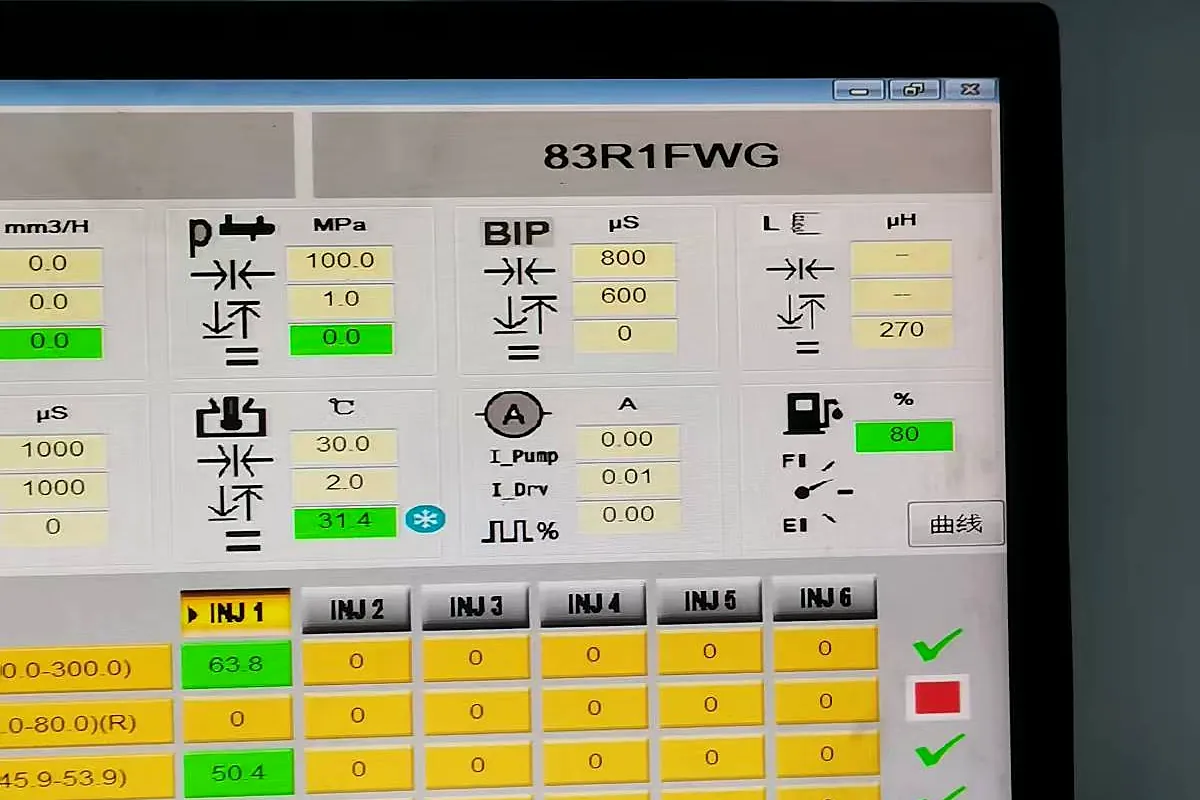
return-flow behavior.
Does the injector with the most return always need replacement?
Not automatically. First confirm the test method, repeatability and application-specific limit.
The complete diagnosis should also consider rail pressure, fuel supply, electrical checks and
other engine conditions.
Can a return flow test identify an electrical injector fault?
It may reveal a hydraulic difference, but it does not replace circuit testing, fault-code
analysis or an electrical response test. An injector can have an electrical problem without a
clear return-flow difference.
Can I use the same limit for Bosch, Denso, Delphi and Siemens systems?
No. Test procedures and limits vary by system, injector design and application. Use the
manufacturer or vehicle service data for the exact engine and injector system.
What information should I send when requesting a replacement injector?
Send clear photos of the complete old injector and every readable number, plus the vehicle or
machine model, engine model and year when available. The number on the removed part is usually the
strongest starting point for compatibility checking.
Summary
A diesel injector return flow test is most valuable as a controlled cylinder-to-cylinder
comparison. Unequal results can direct further diagnosis, but the technician should confirm the
test setup, use the correct limits and check the wider fuel system before replacing parts. For
additional identification help, see the
Rayfuel Diesel Parts Guide or contact
Rayfuel with the OE number and old-part photos.